Constructing a container home out in the Hill Country? Developing an ADU in East Austin? Either choice is smart for our climate, but before you dream too hard about that rooftop deck, you need to discuss what’s below ground. Austin is known for having some wonky soil, from hard-as-rock limestone to moving ‘black gumbo’ clay.
Building with shipping containers requires a stable foundation to keep your container level, secure, and protected from moisture or land movement.
Today, we’ll discuss 7 types of foundations that we know work great for different budgets, sites, and project sizes. We’ve helped thousands of customers throughout Central Texas determine the best foundation for backyard casitas in Cedar Park, full container homes in Lockhart, and everything in between. Now it’s time to pass that knowledge on to you so you can ace it from day one.
TL;DR
Building with metal shipping containers in the Austin area? The foundation you construct will be your most crucial decision. Below, we will cover 7 of the most common foundation types utilized by container builders:
Permanent Foundations: Concrete slabs (most stable & expensive), pier foundations (corner support only & very inexpensive), and helical piles (fast installation with no concrete). Selection comes down to building style, multi-story or not, and how your local soil reacts; Austin soils being limestone, caliche, or expansive clay.
Temporary Foundations: Wood skids (least expensive and easy to remove), steel skids (easy to move with machinery), and gravel pads (DIY friendly). Ideal for storage containers, workshops or other structures you may need moved.
Key Takeaways:
- Make sure your foundation takes into consideration your soil’s shrink-swell cycle. This will save you from foundational shifting.
- Different foundations work best in different areas due to soil type, climate, budget, and permits.
- Consider the container weight. A 40 foot container can weigh 8,500+ pounds and needs to be supported properly.
- Speak with a structural engineer who knows what they are doing and is familiar with TX clay.
- Choose foundation based on if you want permanent or temporary structure (home or storage), your soil type, and access to the build site.
What is a Shipping Container Foundation?
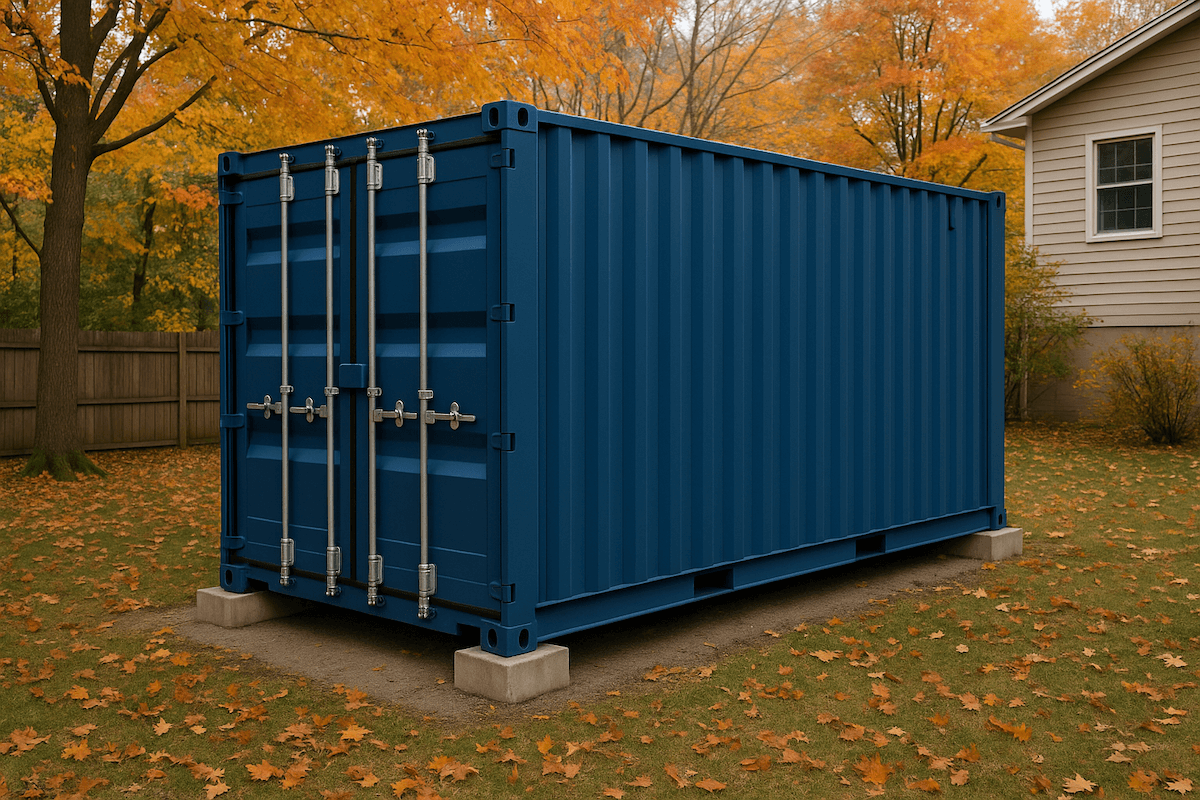
Simply. your containers foundation are the supporting structures that hold up your shipping container and keep it off of the ground. What goes between Mother Earth and the bottom of your steel crate. This could be as simple as some cinder blocks around the perimeter or as complicated as a full blown basement with poured walls–and here in Central Texas it mostly depends on if you have Hill Country limestone or Blackland Prairie clay.
Read our Shipping Container Sizes and Dimensions post for tips on planning your foundation footprint.
Spotlight: Building In Austin
Hold that thought on foundation types, and let’s shine a light on what makes Austin unique. Austin borders two COMPLETELY different geological landscapes. The Edwards Plateau limestone to the west (think Hill Country, Dripping Springs, Bee Cave, West Lake Hills) and the Blackland Prairie clay to the east (East Austin, Manor, Pflugerville, Round Rock). East Austin earned its reputation as ‘Flash Flood Alley’ because the expansive soil has a tremendous amount of highly expansive “black gumbo” clay that expands and contracts with every change in rainfall and drought like a giant sponge.
Because of this, foundations in Austin often need to go down far enough to reach what we call the ‘active zone,’ or the depth where soil moisture levels remain constant. Otherwise known as deep enough so that the container doesn’t heave during a rainy Spring or crack during a July drought. Here in Austin, frost is rarely the concern when building a foundation; soil expansion caused by moisture is. Zone changes such as the HOME Initiative have also increased the amount of ADUs and casitas being built within Austin city limits, making container builds more popular than ever in Austin.
Why Shipping Containers Need A Foundation
Stability
No matter how well you build it, your container will settle over time if it isn’t placed on a quality foundation. Container homes are built to stack on top of one another on ships and trains across the globe, but your backyard in Austin is not a flat steel deck. As soil heaves and pulls back your container will too, causing doors not to line up after heavy thunderstorms, sloped floors, and even stress on the steel framing itself. A proper foundation will keep your container from shifting and help it stay put long into the future.
Corrosion Prevention
Steel and water don’t mix. Just as ground moisture can cause rust and corrosion to your steel bottom by wicking up through the earth, your inside will start to rust if you don’t have a foundation. Elevating your container creates an air gap between the bottom of your container and ground moisture, helping to prevent decay and keep your container looking great for years to come.
Support
Did you know that a 20 foot container weighs in around 4,500 pounds empty and a 40 foot comes in at over 8,500 pounds? That’s a lot of steel sitting on your lot. And we haven’t even accounted for what you plan on putting inside or modifications you want made. Container foundations help support this weight by distributing it across a wider area so your container won’t sink into the soft ground.
7 Types of Shipping Container Foundations
Foundation Idea #1: Full Concrete Slab Foundation (The Gold Standard)
Going with a full concrete slab means you’ll be pouring concrete on top of your entire container footprint all at once. This allows you to have a completely solid base, giving you the greatest stability, near fool-proof moisture protection, and very easy hookups for electrical and plumbing utilities. The only downside to this type of foundation is you cannot make modifications to it later on, nor can you easily move your building. This foundation type is great if you have one of the flat lots found in Round Rock or Pflugerville, but don’t forget to include a vapor barrier under the concrete to prevent Texas humidity from wicking into your container!
Foundation Option #2: Concrete Pier/Footing Foundation (AKA Simple & Cost-Effective)
Instead of pouring one large concrete pad, these individual concrete pads are drilled into the ground until they reach what is called the active zone, where soil moisture content stops changing. This supports only the four corners of your shipping container, the bare minimum you can do while still having it function properly. Although extremely cost effective, concrete piers can take more time to ensure everything is leveled across multiple points. Since you’ll have easy access to the underside of your container, running plumbing and adding insulation can be done with ease. We think this is the winner for most Central Texas builds. Piers work great on sloped lots found in Westlake Hills or Bee Cave, and allow for extra airflow underneath to keep you cool on our 100°F days.
Foundation Idea #3: Concrete Stem Wall Foundation (The Traditional Look)
Brings you back to good ol’ mamma’s house with concrete footings and a continuous vertical wall running around the perimeter of your shipping container. Concrete stem walls often allow you to have a crawlspace or even a basement under your building. This allows for great thermal breaks between the ground and your container, gives you the most traditional house foundation look, and allows a large area to hide all your electrical, plumbing, HVAC, and other utilities. Having a full poured stem wall will cost more than using just piers or a full slab. We typically use this style when trying to add containers to traditional home additions, or if you want the bonus space of a crawl space to hide HVAC units, storage, etc. It’s super popular with container homes trying to blend into the rest of Austin’s neighborhoods.
Foundation Idea #4: Helical Piles / Screw Piles (The Quick Option)
Helical piles, also commonly known as screw piles, are literally large steel screws that are drilled into the earth until they reach soil that can bear the load of your building. Think of it as a super sturdy ground anchor. Installation is super fast since there is no curing time, and excavating your site will also be minimal. These can become pricey depending on how many piles you need, and also require special equipment to put them in. Helical piles fit our Austin hills Country homes best–when your foundation piles reach limestone bedrock, it’s basically there forever. Helical piles are also great for folks that want a ‘less harmful’ build on their property. If you’re trying to keep some heritage Oak trees on your land, these piles hardly touch the root zones when being installed.
Foundation Idea #5: Railroad Ties or Treated Wood Skids (The Temporary Solution)
Round 2 of naturally season your food! Reinforced wooden beams or recycled railroad ties are lain on their side across a prepared bed of gravel. This method is the quickest way to get your shipping container off the ground (and dirtiest), but can just as easily be taken away when your project is complete. This is perfect if you don’t need your building to last forever, like with a storage shed or portable restroom rental business. We don’t recommend building anything habitable with this foundation type in Austin because your wood skids will eventually rot. Humidity speeds up rot like nothing else—learn from our mistake! If you’re just looking to mock-up a design before build or want to get something temporary up quickly, this foundation type is for you.
Foundation Idea #6: Steel Skid / Runner Foundation (Industrial Style)
Welding your container to thick steel beams (skids) that then sit on pre-leveled strips of concrete or a compacted gravel pad is about as industrial and heavy-duty as you can get. These are insanely strong and also allow you to roll your container short distances with appropriate heavy equipment. However, welding steel to steel creates what is called a thermal bridge and must be properly managed with your insulation strategy. Steel runners work best for commercial builds, art studios, workshops, East Austin maker spaces, or other structures that may require relocation occasionally.
Foundation Idea #7: Gravel Pad / Compacted Fill (The Minimalist Approach)
Digging out an area then backfilling with compacted layers of crushed gravel is the “minimalist” method of creating a foundation for your shipping container. Fast drainage is guaranteed, prices are relatively low, and you can do it yourself if you’re in a bind. However, it is not recognized as a permanent foundation since the earth may continue to settle or shift. This is best used when only storing a single shipping container, very small cabins, or if your property already drains exceptionally well. Helpful hint if you’re in the Austin area: use crushed limestone (1-inch minus) not smooth river rock. The edges help lock in place for much better compaction in our expansive clay soils.
How to Choose Your Foundation
From the rocky hills of Dripping Springs to the cramped suburban lots in Leander, we’ve spoken to thousands of container owners just like you about foundations. Here are some things we’ve learned to keep in mind as you start planning yours:
Soil Conditions
Soft, unstable soil or rocky ground will have a big impact on your foundation options. Clay retains water and expands/contracts significantly, and Austin is built on some of the most expansive clay in the country (known as Blackland Prairie). Sandy soils drain well but can shift when moisture levels change. Solid rock, like the Edwards Plateau limestone found west of Austin, can offer a stable base, but is difficult to excavate. Soft or variable soils may require deeper foundations that stabilize your container below the frost line—such as helical piles or concrete piers—while dense, well-drained soils may only require a gravel pad.
Cold Climate and Frost Line
We don’t see frost heave in Central Texas like they do in colder climates, but our problematic soil expansion is triggered by moisture, not freezing temperatures. Expansive clay soil will expand in the wetter spring months and contract during the hotter summer months. This cyclical movement will slowly warp your storage container if your foundation doesn’t extend into what’s known as the ‘active zone,’ where soil moisture levels remain relatively stable year-round. Ask your local permit office about frost line requirements, or consult with a geotechnical engineer to determine the depth of seasonal soil movement on your lot.
Price Range and Permits
Kidding around with foundations can be expensive. If you pour yourself a concrete slab that your local building department doesn’t allow, you’ll have wasted significant time, effort, and money. Different foundation materials also come with significantly different price tags. A simple wood skid foundation will cost you around $500, but a concrete slab will typically cost $5,000 – $15,000 or more. Permit requirements aren’t always up to you, given your specific location and the intended use of your storage container. Austin’s recent embrace of ADUs and backyard cottages via the HOME Initiative has created a lot of opportunity for container homes and office buildings, but each of these programs require permits that carry their own foundation requirements.
Access to Site
This may seem obvious, but can a concrete truck even reach your building site? If you’re building on a lot without street access or in the backcountry on difficult terrain, hauling concrete to your site can become extremely expensive, if it’s possible at all. Foundations that require only portable equipment vs. large trucks and heavy machinery, like helical piles, wood skids or steel skids might be your only option if access is limited.
Got questions about which foundation is right for your storage container? Drop us a line or give us a call. Our knowledgeable container experts have seen just about every foundation successfully installed in Travis County…and some we’re not supposed to mention. We can help you narrow down your options based on your intended use, budget, and specific site conditions. Call us before you start spending money, and we’ll make sure you choose the right foundation the first time.
Foundation Preparation & Installation Tips
Site Preparation
Move any rocks or other debris away from where you plan on laying your foundation. Use a laser level or transit to level off your work area. Grade the surrounding soil away from your container so that rainwater will run off. Standing water will wreak havoc on your foundation, so addressing drainage is particularly important here in Flash Flood Alley. You may need to dig French drains to redirect water from pooling in your site.
Concrete Slab Thickness
Concrete Slab: 4-6″ thick with rebar or wire mesh (consult a structural engineer if your slab will support heavy equipment or if your project includes stacking containers). If you’re on expansive clay soil, we recommend spending the extra money to have your installer put in a post-tensioned slab.
Securing Your Container to the Foundation
Steel plates or anchor bolts embedded in wet concrete at each corner of your shipping container are the norm. Then weld or bolt your corner castings to those anchors when the concrete slab has cured.
If you plan on placing your shipping container on wood or steel skids (i.e. not permanently securing it to a foundation), twist locks (which are also used to move shipping containers on ships) can be utilized. Another bonus? You can move your container again in the future.
Important: Anchor all four corners! Think of your container as a large box with only one side attached. High winds can easily lift or tip the container by pressing on the free corner(s). Take extra care during Austin’s spring storm season where high winds in the form of straight-line winds (not tornadoes) can pose a real threat to improperly secured containers.
Don’t understand how containers get transported and placed in shipping container homes and offices? Read our complete guide to moving shipping containers.
Regional Considerations for Container Foundations
At Steel Box, we serve customers throughout Texas and the Southwest. We understand that foundation recommendations can vary based on region-specific concerns. Here at Steel Box, we’re from around here too, so we know what Mother Nature dishes out in your area:
Central Texas (Austin obviously, but Austin we’ll call The “Factor”): flash flooding and SUPER expansive ‘black gumbo’ clay. If you live in East Austin, Manor, or even way out toward Elgin, you have clay that acts like a sponge expanding and contracting with every change in the weather. Deep concrete piers that extend into the active zone or engineered slabs ensure your doors don’t stick after a downpour. West of MoPac we start talking about Edwards Plateau limestone and helical piles screwed into Mother Grundy herself.
North Texas: freeze/thaw issues require foundations that extend beneath the frost line (typically 12-18″ deep) and we service Dallas, Fort Worth, and Panhandle customers that need this kind of solution all the time.
South Texas: we see lots of expansive clay like you’d find in Central Texas but with longer dry spells in cities like San Antonio and Houston. Correcting improper drainage with pier foundations is usually the best solution to avoid settling here.
West Texas: You have rocky, hard-packed soil that is difficult to dig but offers substantial natural bearing capacity. Many folks use gravel pads and piers in El Paso, Midland, and other cities.
South Texas: sandy soil, humidity & corrosion, and hurricane-force winds and blow-downs. Lots of our customers along the Gulf Coast from Corpus Christi to Beaumont opt for slabs or helical piles with proper anchoring and powder-coated corrosion protection.
Rural/remote: anywhere in Texas really, you may run into access issues which can eliminate anything but helical piles or wood skids. We’ve delivered containers to ranches, oil field sites, and land that was miles away from any paved road.
When you work with Steel Box, you don’t just get a shipping container, you get hometown knowledge to prevent you from making a costly mistake for your region.
Your Roadmap to a Level Container
Just remember that there is no ONE ‘best’ foundation for shipping containers. You have to evaluate your specific project needs based on permanence, site constraints, the realities of Central Texas geology, and budget. A storage container will have different foundation needs than say, a container home.
Do talk to a structural engineer familiar with Central Texas clay or other knowledgeable local building professional before you start. Foundations can be costly so you don’t want to make an expensive mistake and end up failing inspection or not meeting local building codes. A proper foundation will set you up for success with your container project.
Ready to Start Your Container Project?
Steel Box Shipping Containers is your complete source for a successful container project:
- Premium containers in a wide variety of sizes, new or used, to meet your needs, including cargo-worthy containers.
- Expert delivery to your prepared foundation site, so your container is delivered safely.
- Guidance in selecting the right type of container for your foundation, whether standard or specialty.
- Low prices, with instant online quotes so you don’t have to wait.
- Experience and knowledge gained from real container delivery experts that have moved thousands of containers across the country.
Get your instant quote in 30 seconds or give our container experts a call at 512-240-6710 and let us know about your foundation choice, delivery options and any other questions you have about your project. We’re happy to help get you started!