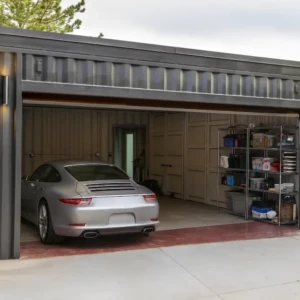

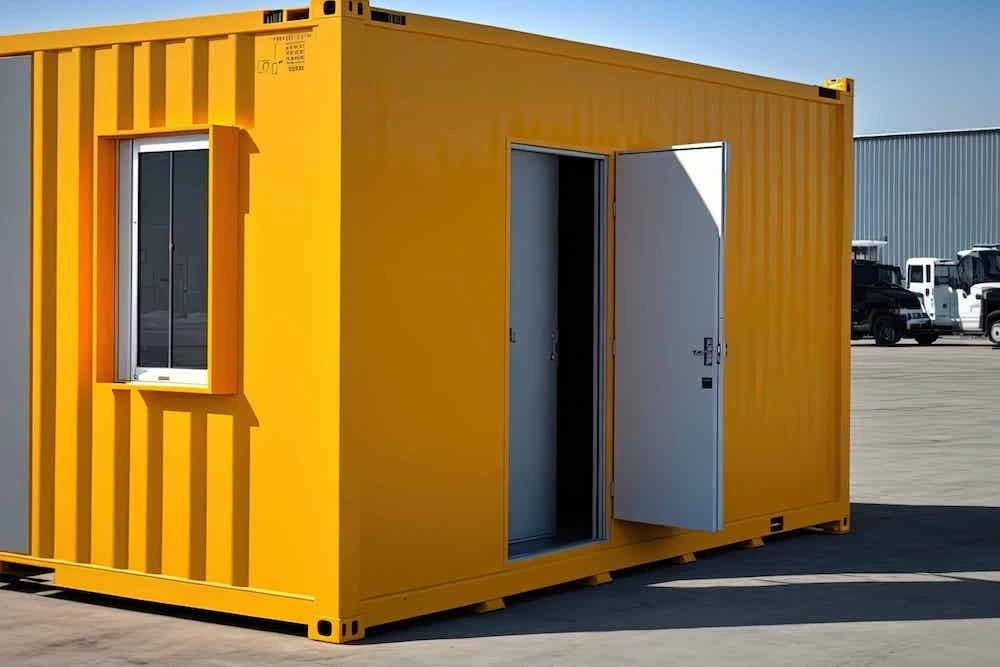
Garage workshops built the old-fashioned way require thousands of dollars, many months of your time, and they’re built in one place permanently. With a shipping container, you get something ready to customize as soon as it’s delivered. It’s made of steel so it’s secure, built to last in the Texas elements with little maintenance, and it can be relocated if you move. Take your shop with you, already fully equipped. No starting over. No abandoned investment.
Workshop Container Quick Specs
| Feature | 20’ Standard Container | 40’ High Cube Container |
| Interior Space | ~150 sq. ft. | ~300 sq. ft. |
| Best For | Small lots / Hobbyist shop | Professional / Large machinery |
| Ceiling Height | 7′ 10″ | 8′ 10″ (Great for dust ducting!) |
| Portability | High (Easy to move) | Permanent / Semi-permanent |
8 Shipping Container Workshop Ideas
The Serious Woodworker’s Shop
If you like to mess around in wood every once in awhile fine. But if you’re serious about woodworking you’ll need to be serious about dust collection. With 40ft you have enough length to have an 8 foot workbench along one wall with a centralized dust collection system occupying the other side of the shop.
Dust Collector Nerd Details:
- Mount cyclone separators as close to the entrance as possible for easy chip disposal
- Run PVC ducting overhead to blast gates at your machines
- Weld brackets to your steel walls at planers, jointers, tablesaws, etc to keep filters off the floor
- Fold down assembly tables that provide you 16′ of edge-gluing capability and flip up for machining
The Junk Shop Mechanic’s Shop
You’ll be lifting cars or operating engine hoists, so your floors need to be reinforced before your shipping container even arrives. Prepare to pour a 4 inch reinforced concrete pad (steel rebar mesh inside) underneath it.
Hoist Those Vehicles Nerd Details:
- Paint your plywood floor with industrial epoxy coating rated for vehicle repair shop use (gas, coolant, heck that dropped wrench will bounce right off)
- The width of a 40ft is enough to park two cars bumper to bumper and have room sides for rolling tool chests or a parts washer
- Cut one of the existing end doors off (leave the other full door intact for secure storage) and you can drive your vehicles right through it!
- Run 240V circuits for welders and air compressors (there’s nothing better to ground than steel)
Maker/Welder’s Garage
Great lighting is everything. Consider framing windows to cut openings in the roof and place Velux sunroof style skylights along the center of your roof. They’re specifically designed for putting into metal roofs and provide natural light with minimal UV penetration. Bonus: Unlike windows they won’t leak rain water all over your tools either.
Light ‘Em Up Nerd Details:
- Weld in standard residential windows with appropriate insulation framing
- Hang mini-split AC/heaters on outside walls (installing can be DIY for <$1,500)
- Steel holds temperature better than you think once insulated; you won’t roast in the Texas summer
- Electricity should be manageable even in peak summertime use
Tech “Maker Space”
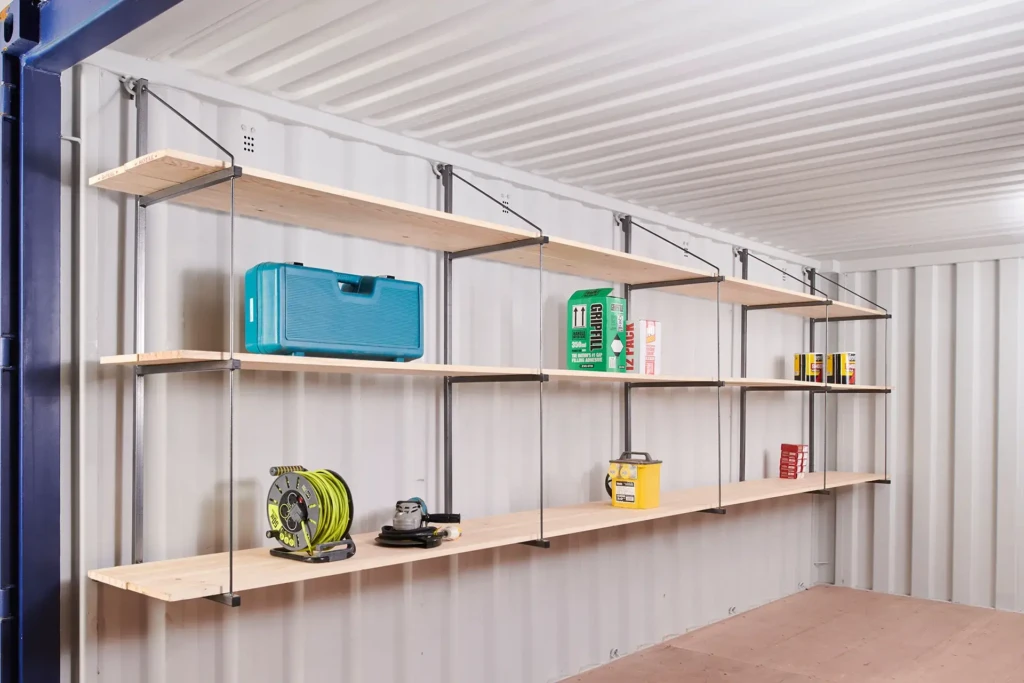
Your 3D printers, laser cutters, CNC routers require massive amounts of power and filtration we forgot to mention. Lucky for you steel containers make this easy.
Digital Woodworking Nerd Details:
- Mount a 100 amp subpanel with dedicated circuits for each major device
- Steel enclosures provide grounding and actually reduces EMI/RFI — your electronics will run better than your basement DIY shop
- Mount inline duct fans that vent to the roof creating negative air pressure and pulling dirty air from your workspace
- Add rubber mats over the plywood floor to dampen vibration from CNC routers
- If you’re getting crazy go full spray booth with positive-pressure HEPA filtration to keep your work environment dust-free
Potting Shed/Gardening Workshop

Mowers spill gas, tillers track mud, bag after bag of mulch creates dust. A storage shed just doesn’t stand a chance.
Garden Till Those Nuts Nerd Details:
- Leave plywood flooring as-is or paint with truck bed liner coating
- Hang garden tools off the ceiling or place heavier items on commercial shelving
- Gas cans, seed, soil nutrient storage won’t have to worry about mildew or moisture
- Roll it up on wheels, break down work bench/sink and store away tools overnight at job sites
Conversions Every Workshop Needs
Insulation: The First Frontier
You ain’t living until you’ve worked in an uninsulated container on a Texas summer day. Spray foam insulation closed-cell texture will create an air seal. The thickness options (2-3 inches) also add structural support to the walls.
Insulation Showdown:
- $2-3/per sq ft for spray foam but way higher R-value and no moisture absorption
- Totally eliminates the metallic echo you get from insulation batt options
- Insulation Batt $1-2/sq ft but you’ll need to frame out walls and add vapor barrier
- 3″ of foam on your roof makes working conditions 15-20 degrees cooler inside on 100+ degree days
Lighting & Electrical: Bright Idea
LED shop lights have changed the game on containers. Linkable 4 foot fixtures strung down the center of your ceiling provide even light for less than $200.
General shop circuits:
- Shop light circuit (15 amp)
- Standard receptacle circuit (20 amp)
- 240V circuit for table saws/plants (depending on tool electrical requirement go 30-50 amp)
- HVAC circuit if necessary (15-20 amp)
- Run conduit along the bottom walls for future wire pulling
- GFCI will be required on all receptacles because your metal shop is now the ground path — electricity loves steel boxes
Ventilation: In and Outflow
You may have HVAC but you still need some passive ventilation. Since metal buildings create significant temperature differentials with the outside your going to have condensation. That condensation needs a place to go, otherwise you’ll be rusting out your building.
Good airflow habits:
- Add louvered vents on the floor on one side of the shop and near the ceiling on the other end
- Install an exhaust fan in the ceiling large enough to turnover air every 5-10 mins
- Running welders/paint/solvents? You’ll need a spray booth with external venting and negative air pressure
- If you don’t ventilate properly you’ll start growing rust and mold from the temperature fluctuations.
Flooring: Where You’ll Spend Most of Your Time
Sure the factory applied marine plywood is fine if you don’t plan on working in it. But if you’re like us you want better. An epoxy floor coating (think epoxy paint but thicker) will create a durable surface your tough on and easy to keep clean.
Flooring Showdown:
- Scuff up plywood with sanding so coating can adhere
- Interlocking rubber flooring is cushy and doesn’t require gluing down
- Overlay the whole shebang with thin concrete (consult engineer can you can handle the added weight)
Fit Your Tools to the Space
Maximize Vertical Space: Magnets Are Your Friend
Hang those magnetic screw trays wherever you want, parts bins too. Tool magnetic strips have endless possibilities and just stick to those steel walls.
Working vertically Nerd Details:
- Cover a whole wall with magnetic sheet if you want a movable pegboard with sockets to spray paint cans
- Weld storage racks to your ceiling for off-season or special occasion items
- Your roof’s got corrugations every few inches as well. Utilize high up space for lumber racks, hang bikes, overhead cabinets
- Install wall cabinets no more than 16 inches deep. Keeps your benches clear plus allows you to see everything.
Fold-Down Work Surfaces
I don’t want a work bench taking up floor space when I need it. Sure you can build out fold-down tables to the dimensions you want. Attach to your wall with piano hinges, fold-down brackets or drop-down legs.
Fold-Out Workbench Nerd Details:
- Build a full 6 foot bench that folds down to roughly 3 inches of depth
- Include built-in clamping stations and dog holes
- Flip it up and you have vertical storage on a french cleat wall
- Flip it down and you have an 8 foot wide glue-up station.
Hook-Ups
The Perks of Going “Dual Container”
Take two 20ft and place them parallel to each other and bridge them with a large center opening. You just created a 320 square foot workshop with 160 square feet you can customize however you’d like. Keep it open or close it off with drywall and windows. Maybe even a door for staff.
Bonus Build-Off:
- Don’t feel like stopping there. Get crazy and build a two story garage. Place one container over the other.
Why Buying Quality Matters
Buying previously used shipping containers for your workshop conversion has invisible costs. A One-Trip container (AKA new, AKA premier condition) has only traveled across ocean one time. They offer the benefits of strong steel with little to no cosmetic damage.
One Trip versus Used Conditions:
- No weak floor areas or weird stains like previous Oil had been stored
- Repairing damages only costs more money versus a container with no damage
- You’re going to cut holes and weld things to your container. Start with the bad stuff and it will only create headaches
- Look for Cargo-Worthy or IICL (Improved Intermediate Certificate of Loading) certified containers. Both show the container was deemed structurally sound by a third-party inspector.
- Wind-and-Water-Tight (AKA Rain-Tight) certified containers ensure water tests passed before you buy.
Stop Dreaming, Start Building: Your Custom Texas Workshop Awaits
Build out your dream shop in your timeline and budget. Shipping container workshops are professional enough for hobbyists and serious enough for pros. The only limitation is your imagination. Need help? We have 20ft and 40ft containers in our inventory right now or call Steel Box Shipping Containers for a custom quote. We’ll help you pick the perfect container and deliver it to any corner of Texas.