
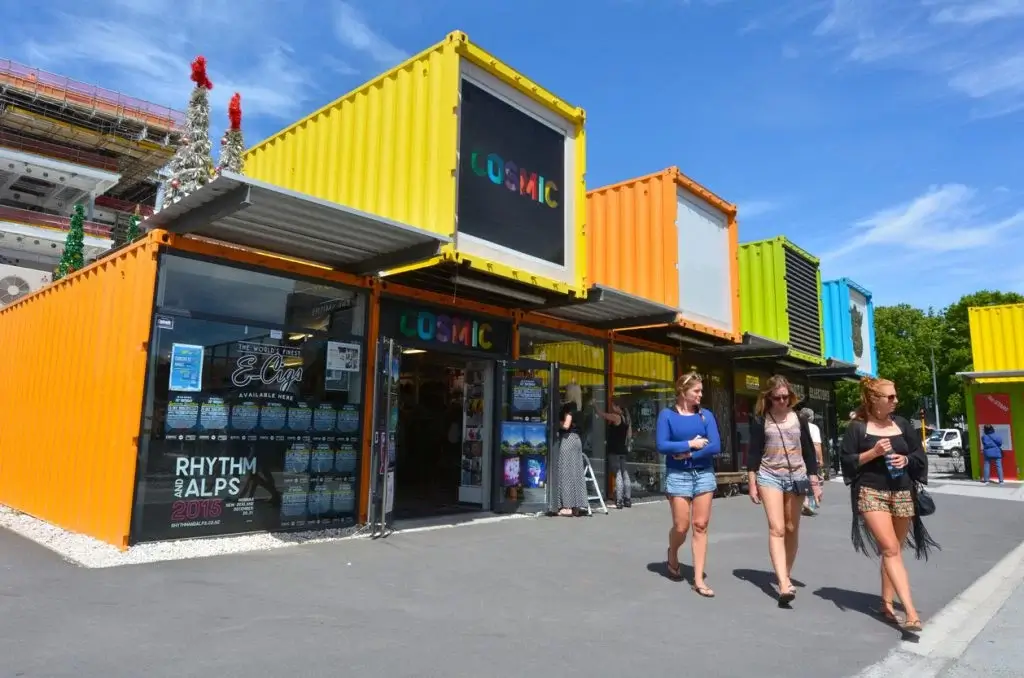
Retail storefronts have never needed to be more flexible than they do today. Brick and mortar locations cost a fortune to design, build, and secure, and they’re a long-term commitment. They lack mobility, take months to construct, and don’t offer the opportunity to create pop-up destinations and leverage unique locations. They’re less affordable than they’ve ever been while customers are shopping less in-store than ever before.
Containers to the rescue! Shipping containers are fully customizable and available for short- or long-term lease and purchase. They’re moving a revolution in retail by offering modular, easily branded, affordable, and functional storefronts in a variety of sizes. Retailers are deploying shipping containers in innovative new ways to reach their customers.
In this article, we cover five shipping container store concepts for today’s retail market, discuss common uses and design elements, and walk through logistics and next steps.
Why Containers Win: The Retail Advantages
Mobility & Flexibility
Shipping container storefronts provide more freedom and flexibility than ever before. Land a prime retail space at the next festival in town with a weekend pop-up store, rent your container in an up-and-coming neighborhood before making a long-term commitment, or follow the crowds by relocating. Container stores let you test locations, chase seasonal demand, and react more quickly to market changes in ways that traditional commercial construction often doesn’t allow.
Cost Efficiency
Container construction costs are orders of magnitude less than traditional construction in both build time and construction materials. Container storefronts can be open for business in a matter of weeks instead of months, with construction costs as much as 50% lower than a comparable custom build. This accessible construction timeline and pricing presents less risk when breaking into a new market.
Brand Appeal
A shipping container store is eye-catching, memorable, and on-trend in a way most traditional storefronts are not. The industrial aesthetic is big in the retail world, from the structural steel framing and flooring to the design elements like window placement and exterior cladding. Container stores have a built-in appeal that many brick and mortar locations have to work much harder (and much more expensively) to achieve.
Security & Durability
Container construction offers steel walls, reinforced doors, and overall excellent security against theft and break-in. Container construction provides retailers the peace of mind and security of their merchandise and customers. Container walls and doors are made from the same materials that are meant to survive being jostled on ocean-going vessels. They’re hard to breach, and your high-value inventory and high-touch customers will appreciate that.
5 Creative Retail Store Ideas & Use Cases
Pop-Up Fashion Boutique
Key Modifications: Roll up doors, custom interior lighting, dressing rooms with full-length mirrors, open concept fixtures to increase display space.
Best For: Rental or short-term leases. Shipping container fashion boutiques are perfect for designers, rental programs or short-term lease situations. Test drive a market with seasonal collections, event follow-ups, or explore a neighborhood’s viability before committing to a multi-year lease on traditional retail space.
Modular Food & Beverage Kiosk
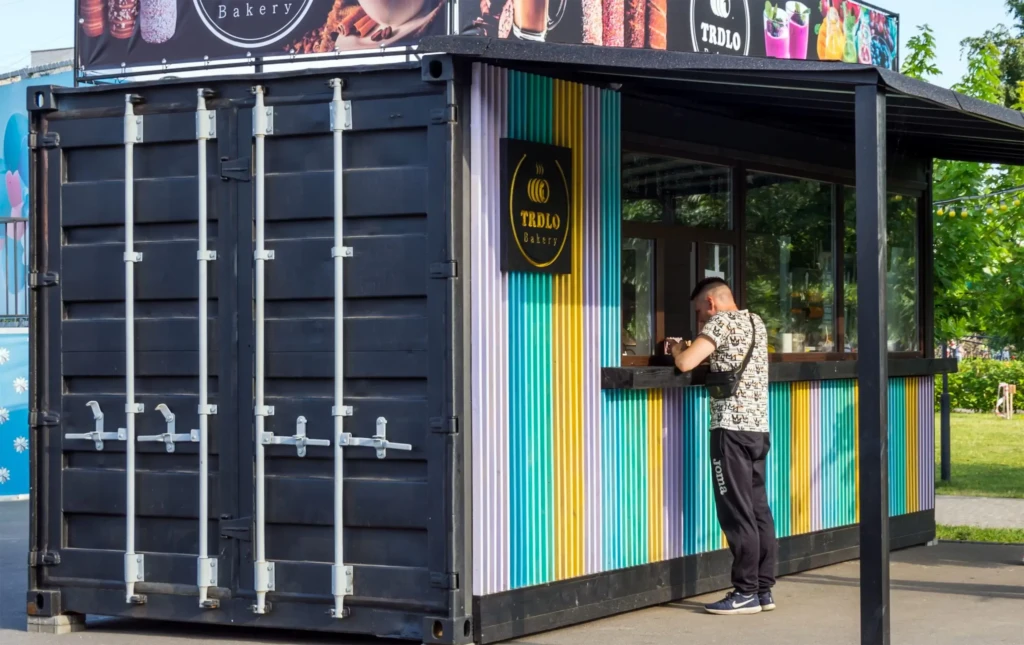
Key Modifications: Service windows or fold-down counters, slip-resistant flooring, built-in plumbing for sinks and food equipment, dedicated electrical service, ventilation systems, and health department-compliant finishes.
Best For: Purchase or franchise fleets. Food trucks are all the rage in the kiosk world, and container kiosks are the next frontier. Coffee shops, juice bars, and specialty food trucks that want to standardize their design, brand, and security across a fleet of units will benefit from container builds. Kiosks are also a fantastic way to dip your toes into a market, either as a popup in a farmers market or event space and lock down a permanent unit.
High-End Showroom or Gallery
Key Modifications: Large glass panel installations to bring in natural light, climate control to set indoor temperature and air quality, high-end interior finishes such as polished concrete or hardwood floors, track lighting, and exterior cladding.
Best For: Purchase for a permanent statement. Galleries, showrooms, and luxury goods retailers can all create unforgettable retail experiences in shipping containers. Art galleries, high-end furniture showrooms, or high-dollar accessory brands like jewelry and clothing all benefit from one-of-a-kind container builds that draw the eye and create an experience.
Experiential Brand Activation Hub
Key Modifications: Multi-level design and rooftop decks for events, oversized graphics that can’t be missed, built-in technology integrations, flexible interior spaces that can be reconfigured, and upgraded, heavy-duty electrical systems.
Best For: Rental for event marketing or product launches. Experiential brand activations, technology unveilings, or limited-time campaigns and products benefit from the visual impact that shipping containers provide. The ability to pack everything up and roll into the next activation location is key for these use cases.
Temporary Retail or Overflow Storage
Key Modifications: Commercial shelving systems, standard cargo doors or entry modifications, security lockboxes for holding cash or valuable inventory, basic electrical systems for lights and POS, and simple HVAC for comfort.
Best For: Rental during peak season or temporary overflow. Holiday seasons, temporary sales spikes, and seasonal demand all benefit from the temporary nature of container storefronts. Retailers can react quickly to a seasonal opportunity without a long-term commitment. Temporary overflow storage can also be used by retailers in transition, such as moving to a new location or undergoing major renovation.
Design & Functionality Deep Dive
Enhancing Aesthetics: Attracting Customers
The exterior of a container is what attracts customers to your business. That’s the first thing they see before they even enter your store, so it’s important to make the right first impression.
Exterior cladding is the easiest and most impactful way to modify a shipping container storefront’s exterior. Wood cladding can create natural textures and warmer aesthetics, composite paneling adds a modern sleekness, and metal cladding options enhance the industrial aesthetic or can be customized in patterns for eye-catching visual interest.
Window and skylight placement is important in terms of visual appeal from both the exterior and the interior. Large windows on the street side of a container storefront give a “peek inside” look, and can provide the space with an abundance of natural light. Skylights can reduce energy costs while creating a more open and airy feeling in a tight retail space.
Branding elements are both the most powerful aspect of container exterior design and the part that sets a container store apart from traditional retail storefronts. High-quality vinyl wrapping makes your logo and brand messaging pop, custom paint colors can make your storefront recognizable from blocks away, and the overall combination of modern industrial structure and your brand elements creates an instantly differentiated shopping experience.
Critical Comfort & Utility: Keeping Customers
Retail is ultimately a customer experience and buying decisions happen once a customer is inside your space. The challenge is keeping them in your store and comfortable.
Insulation and climate control are essential for a retail space in Texas. Spray foam insulation in the walls and ceiling helps maintain a comfortable temperature year-round. It’s critical in our climate with hot summers and wild temperature swings. The addition of a mini-split HVAC system can heat and cool your space more efficiently than traditional ducted HVAC with much less interior space devoted to ductwork. Comfort and climate control will be the determining factor between a pleasant shopping experience and an uncomfortable, abbreviated visit.
Electrical planning may not be the most exciting part of container builds, but it’s essential to powering every aspect of your operation. Ensure you have sufficient outlets for your POS, charging stations, and whatever equipment or electronics you’re running. Interior lighting should be planned to highlight your merchandise while setting the mood and ambience of your store. Track lighting is one of the most flexible ways to provide interior lighting that can be changed as displays and fixtures evolve. Exterior lighting is another important consideration that allows you to extend your shopping hours and provide a safe and inviting presence after dark.
Security measures offer peace of mind and protect your investment. Steel lockboxes bolted to the floor with reinforced anchors offer safe storage for cash and other valuables. Heavy-duty locks and reinforced doors are an obvious deterrent to theft and break-ins. These container construction elements naturally provide an advantage over traditional storefronts when it comes to security.
Logistics & Next Steps
Permits & Zoning
Container retail builds must meet local building code and zoning regulations just like any other storefront. Building permits, electrical/plumbing work, fire safety and accessibility codes are all governed at the county or municipal level. These ordinances can vary greatly throughout Texas, so an early conversation with your local planning and zoning office can help you avoid expensive rework. Steel Box Shipping Containers can walk you through local requirements and direct you to resources to help you navigate the permitting process.
Delivery & Placement
Site prep for a shipping container build is typically minimal. The space must have level, solid ground that can support the weight of the container. This can be a concrete pad, compacted gravel base, or an existing parking lot or flat lot surface. Delivery truck access is another consideration as containers are delivered on flatbed trailers and need room to maneuver. Deliveries and placement typically take a few hours from arrival, so planning for utility hookup and final landscaping or store design details can help you execute this process.
Ready to Create Your Container Storefront?
High-intent on building your vision? Contact Steel Box Shipping Containers today for a custom quote and our team will work with you to design a container store that’s the perfect fit for your brand, budget, and business goals.
Need flexibility for a temporary project? Browse our container rental fleet to find move-in ready options for pop-ups, seasonal expansion, and event activation.
Make Your Retail Vision a Reality
Shipping container storefronts provide flexibility and affordability options that brick-and-mortar storefronts simply cannot. Containers let retailers be exactly where their customers are and when they’re there. They’re affordable, moveable, and visually different in a way that traditional storefronts can’t match. They let you grow as a business or test new locations and markets in ways that traditional retail construction will never allow.
Containers for retail offers the freedom to keep up with your customer demand, right down to following them to the next event or region. They’re full-service retail locations with a fraction of the cost and complexity of traditional construction projects.
Ready to get started? Contact Steel Box Shipping Containers today to talk about your retail storefront project. Let’s convert steel into your next successful storefront.