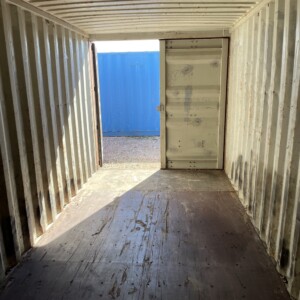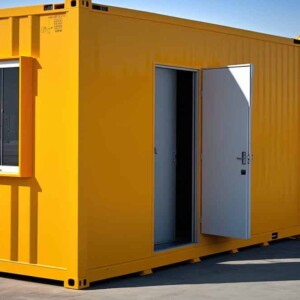

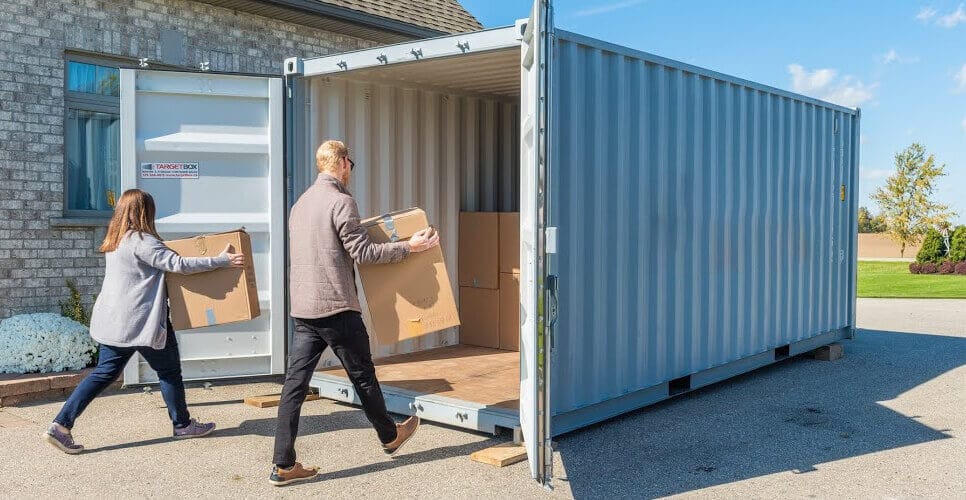
We’ve all been there—standing at the door of a shipping container at 5 PM on a Friday, flashlight in hand, trying to locate that one box that’s somehow ended up in the back corner. Without a solid organization plan, even a spacious 20ft or 40ft container quickly becomes a dark abyss where items disappear into the depths, never to be seen again (or at least not without a serious excavation project).
Here’s the truth: A shipping container is an incredible storage solution, but only if you can actually access what you’re storing. The goal isn’t just to cram everything inside—it’s to create a functional, accessible space that saves you time, protects your belongings, and maximizes your investment in both the cargo and the container itself.
The good news? With the right organization strategy, your container can transform from a frustrating black hole into an efficient storage system that actually works for you.
7 Ideas to Organize Your Shipping Container
Don’t dive right into loading boxes and equipment into your container. Stop for a second and plan your attack. The biggest layout mistake is filling your container without planning for access later on. Treat it like Tetris and you will regret it later.
1. Leave a Center Aisle at All Times
This might be self-explanatory if you plan on packing a shipping container once then never opening it again. If not, you will need a center aisle that is wide enough to walk down. Don’t pack the container wall to wall. Leave that 2-3 foot space down the middle so you aren’t forcing yourself to unload half your container just to access something at the back.
2. Arrange Your Items Based on Frequency of Use
- Items you use often should go towards the front of the container (first 8-10 feet from entrance). Everyday tools, current inventory, seasonal clothing/items you are using right now should go here.
- Items you don’t need frequent access to can go towards the back. Holiday decorations, storage boxes, out of season clothes, archived inventory. Basically if you won’t be opening your container every day to access these items, they can go in the back.
3. Label and Diagram
Here’s a tip that will only take you 5 minutes to do and will save you hours in searching: Get a piece of paper and label where each type of item is stored inside your container. Tape it to the inside of the door so when you need to find something, you’ll know which area to search instead of running up and down the aisle like a pinball.
Tip: Use the Walls
Shipping containers aren’t short by any stretch of the imagination. Most containers have an interior height of 7.5 – 8.5 feet. Take advantage of that extra height and store things up high.
4. Utilize shelving (NO drilling!)
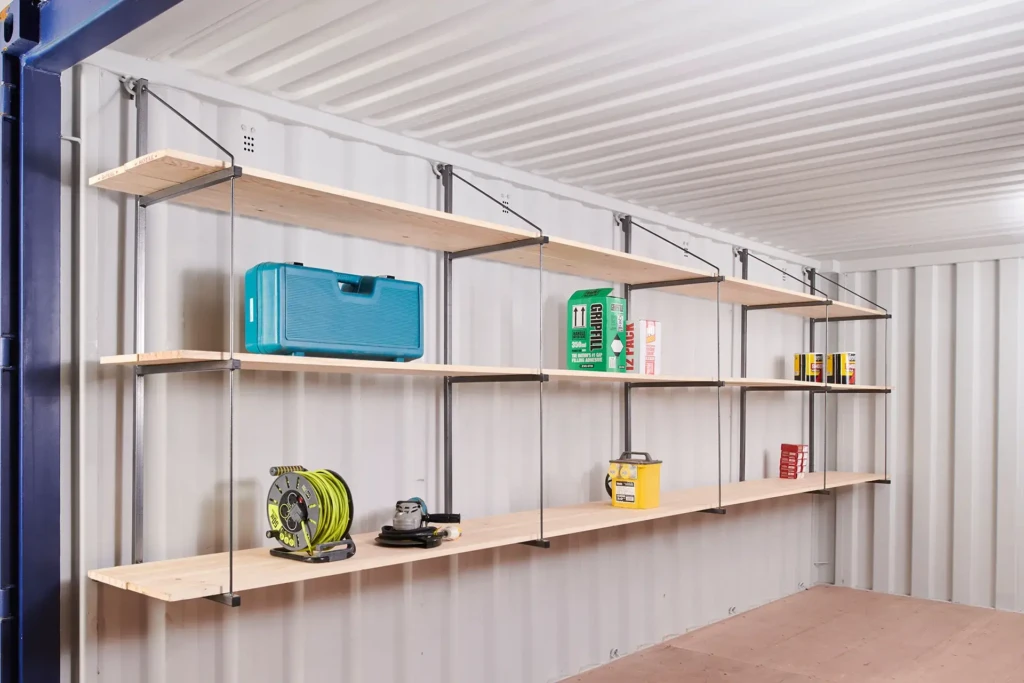
Got a One-Trip (new) container with empty walls? Don’t want to damage the steel? There are shelving brackets made specifically for containers. They attach to the D-Rings located every few feet on the interior of your container.
5. Pipe Racks (great for Contractors)
If you frequently work with long, bulky PVC pipes, lumber, electrical conduit or anything in between, horizontal pipe racks installed along the walls are great for organizing and making visible what you have. Keeping these items up off the ground will also reduce warping and makes it easier to select just the pipe/lumber you need.
6. Mag hooks are your friend
Wait…what? Container walls are made of corrugated steel. Hang stuff from the sides with industrial strength magnetic hooks. Tool cords, extension cords, hand tools, work gloves, safety equipment, clipboard, hell you can probably hang your inventory lists. And the best part? Mag hooks can be moved around at anytime and leave no holes.
7. Organizing Your Environment
Organization starts with your environment. After all, you’re not just organizing space. You’re organizing things inside of a space you control. Store your stuff right, and you’ll prolong its life. Let’s dive into some tips for organizing your environment.
Lighting
Confession: Storage containers aren’t known for their natural lighting. Fix this problem by installing battery or solar LED strip lights along the ceiling. You can find 12V solar options that use motion sensors perfect for off-grid sites. Another option? Magnet puck lights that you can just stick wherever you need them.
Ventilation
Secret Storage tip: Containers can sweat. No, they don’t leak water like a sink. But when temperatures change from hot to cold, your container can develop condensation on the walls. “Container rain” happens when humid air hits cold metal. It wreaks havoc on cardboard boxes and inventory.
Prevent sweating with:
- Silica gel packets or absorbent boxes (Damp Rid)
- Adequate ventilation (DON’T COVER THOSE VENTS!)
- Separation from the floor (use pallets or blocks)
Give Yourself Some Space
Don’t push boxes/pallets up against the walls. Allow 2-3″ of space between items and walls. Air needs to flow through your container through the vents. Make it a habit to not let boxes touch the walls, and you’ll avoid moisture problems and odor.
Situation Specific Organization
Of course, there are different types of organization, depending on your situation. Here are some of our favorite configurations for popular storage situations.
Office/shop Storage

Place a workbench at the back of your storage container. Dedicate that area for working. Use the walls for pegboards or magnetic strips to store tools. Store everyday tools near the door and bulky items/supplies in the back.
Inventory Storage
Businesses that use containers for storage should purchase some shelf units and clear plastic bins. Label bins in large letters. Invest in bins that are all the same size. That way they’ll stack together nicely and look organized. Keep high turnover products at eye level and near the doors for easy picking.
Moving/Home renovations
Color code boxes based on rooms if you use your storage container for moving or home renovations. For example, blue = kitchen, red = bedroom, green = garage, etc. When you move in, you’ll be able to see where everything is instantly just by looking in the container.
Why Organization Starts Before the Delivery
Remember, there’s no use in being SUPER organized if you don’t have the right-sized box for your storage needs. Here at Steel Box we’ve learned that organization really begins WELL before you even pick up that first storage box.
Whether you need a rolling workshop for your small business, or a dark dungeon of doom to stash all your yard sale treasures, Steel Box can help you find the perfect sized shipping container for YOUR goals.
The Steel Box Difference
Your storage container can be so much more than a “metal box”. With the right planning and layout, you can optimize your space and use steel containers as customizable storage/work spaces.
Containers don’t have to be dark and disorganized. Let Steel Box help you plan your perfect shipment today and take the first step towards getting organized.
Not sure if a 20ft or 40ft is right for you? Contact us today for a custom quote or to see our current inventory of new & used containers near you!